
Industry 4.0
Dyna IDCS
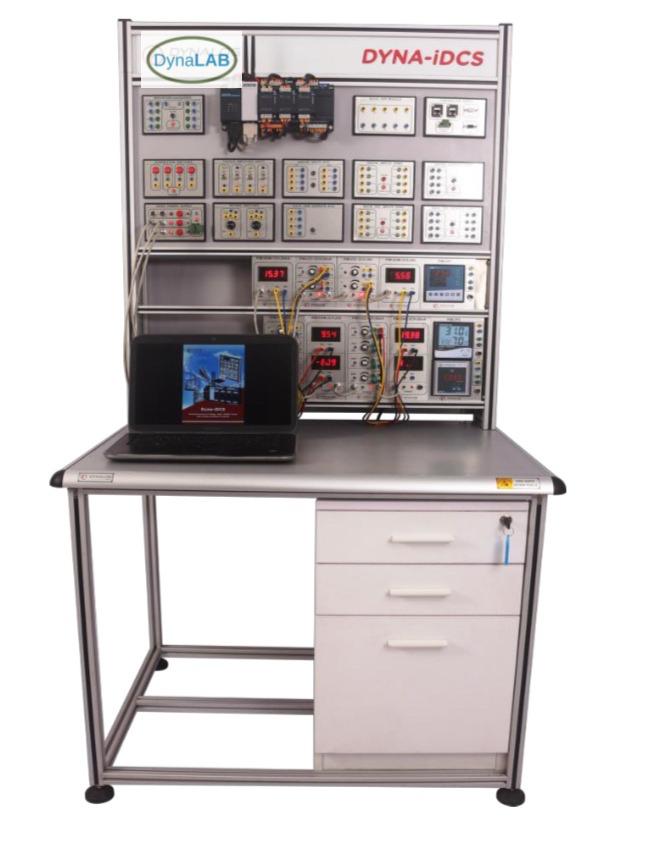
DYNA-IDCS : Intelligent Distributed Control Training System
- Intelligent Industrial controller mounted on ESD protective
Workbench - On-board 24V 6A Power-Supply
- I/O Signals brought out on breakout panels for interfacing
- PLC Programming IEC-61131-3 standards with KW-Multiprog
- Provision for Industry standard DIN-rail mounted units
- Examples for PLC Programming & LabVIEW based Experiments
Included. - Ergonomic Design with Ease of Interfacing
Dyna PLC
DYNA-PLC : Programmable Logic Controller
- DYNA-PLC Applications trainer with Conveyor belt having forward & reverse directions.
- Three Pneumatically Controlled Pistons, for pushing parts off the conveyor.
- Two sets of infra-red Parts sensors.
- Set of Cylindrical Parts along with Parts bin for sorting parts into different categories.
- Run / Stop switches with Indicator lamps.
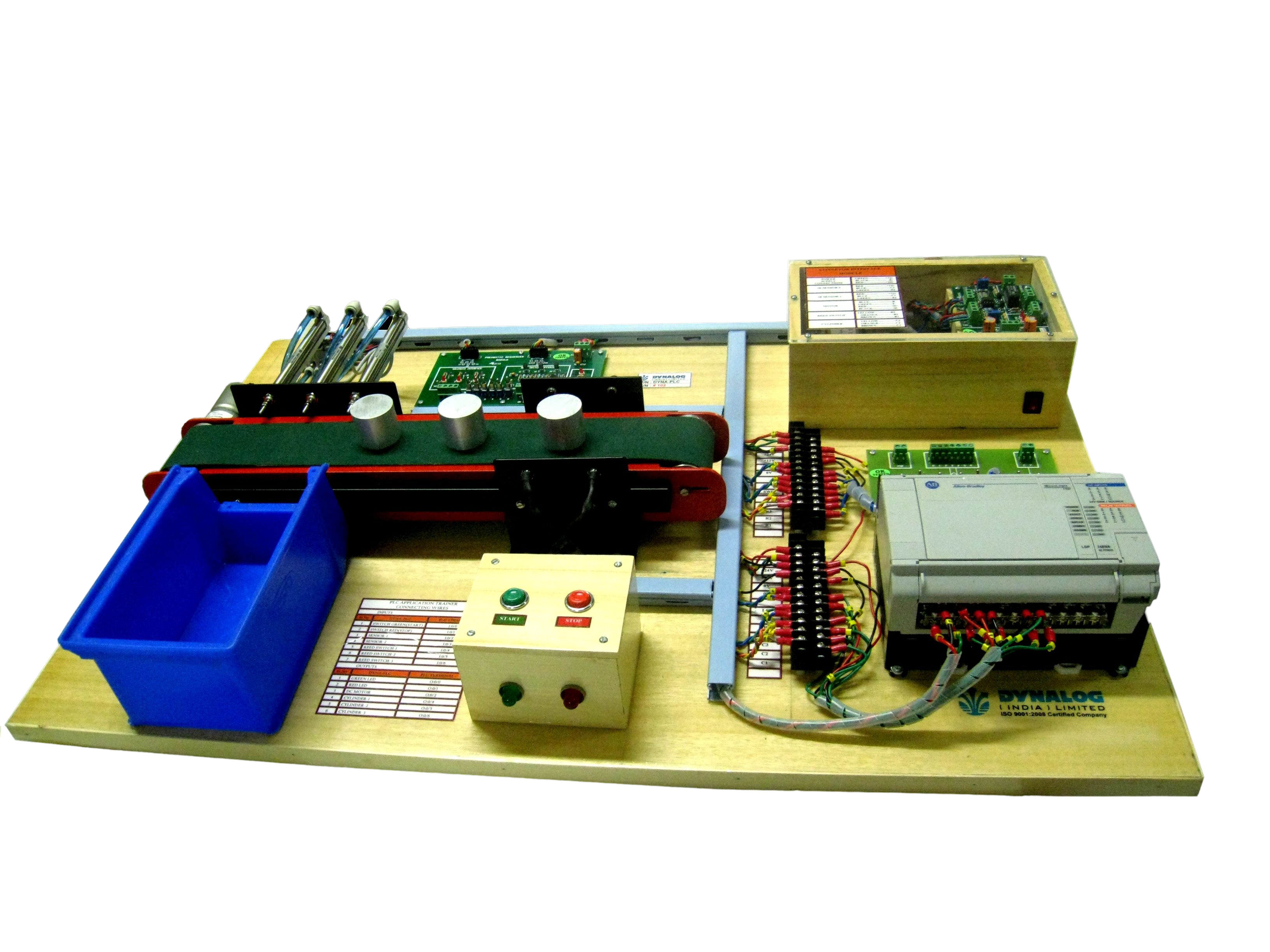
- Seven SPDT Switches which can be used to manually control the inputs of the PLC, in order to
simulate a various Input Conditions. - On board Sensors indication LEDs
- On Board 10K Knob Potentiometer A(0-10V)
AIR CONDITIONING TRAINER
Distributed Control Training Systems - The SIMATIC S7-1200, CPU 1214C, COMPACT CPU, DC/DC/DC controller,
- ONBOARD I/O: 14 DI 24V DC; 10 DO 24 V DC; 2 AI 0 - 10V DC, Timers, and Counters &
Sequencer Functions.
- The controller is supplied with Programming Software, which is used to Program, Monitor, Edit &
Troubleshoot Sequences for practical exercises. - An Interface RJ45 cable that connects the controller to the computer is included.
- Electrically Operated compressed air pump provides a safe source of compressed air.
- The PLC application trainer enables students to create Sequences which simulate the operation of a modern Industrial Production line
Dyna TnIT
DYNA-TnIT : Transducer & Instrumentation Trainer.
- The bench-mounted trainer features the following Input devices and circuits ;
- Carbon Track, Wire Wound, Precision Rotary & Slide potentiometers.
- RTD resistance transducer, NTC Thermistors, 'K' Thermocouples, I.C. Temperature Sensor,
- PIN diode, Photoconductive cell, Photovoltaic cell, Phototransistor.
- Linear Variable Differential Transformer & Linear Variable Capacitor
- Strain Gauge, Air-Flow Sensor, Air pressure sensor
- Slotted Opto-Sensor, Reflective Opto-Sensor
- Inductive Proximity Sensor, Hall Effect sensor
- Precision Servo-Potentiometer Techo Generator
- Humidity sensor
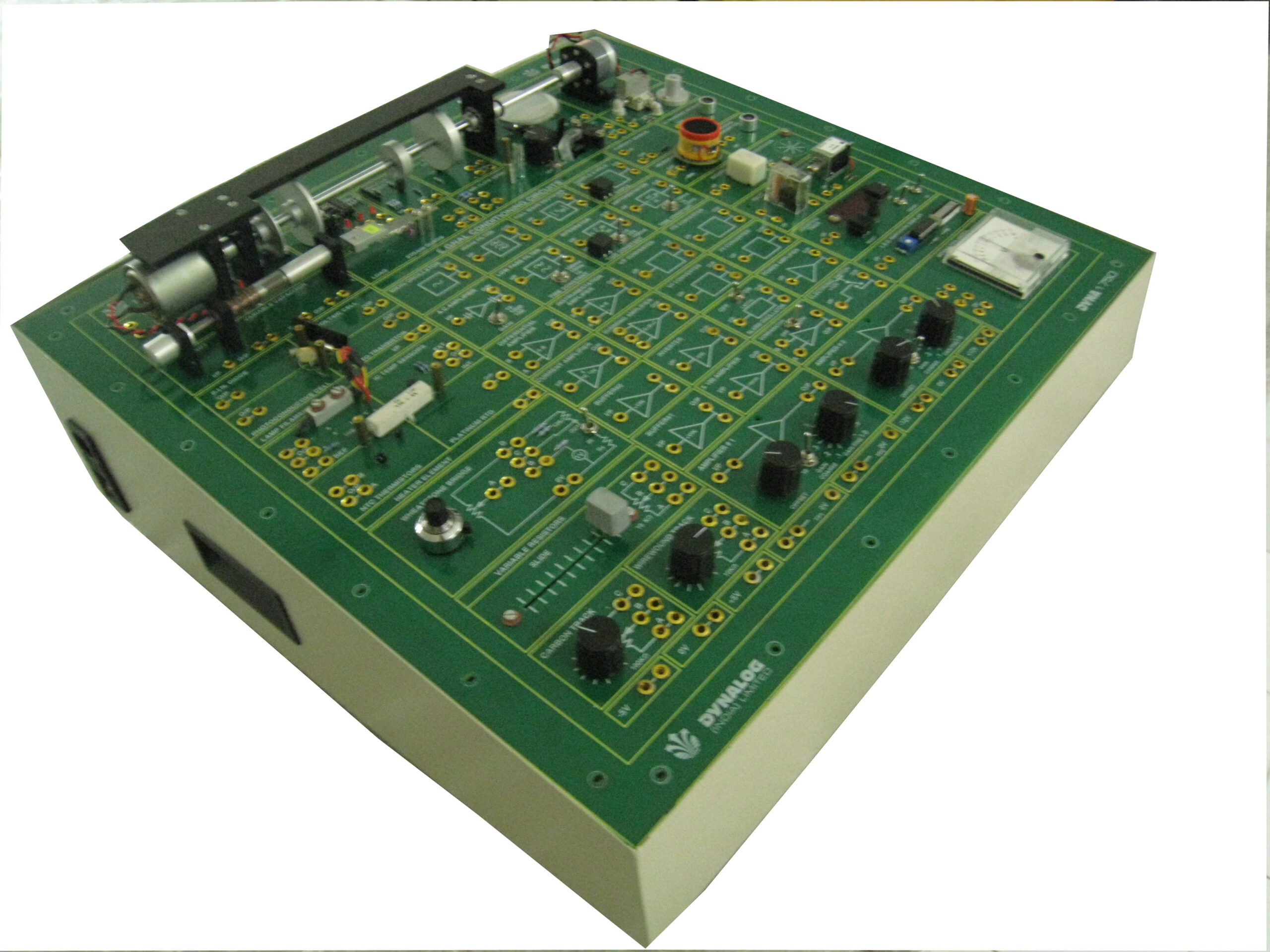
• Dynamic microphone
• Ultrasonic receiver
The Trainer features following Output devices ;
• Heater,
• Filament Lamp
• DC Motor
• Solenoid Air Valve,
• Relay,
• Solenoid
• Ultrasonic transmitter
• Buzzer
• Loudspeaker
• Counter/timer unit with LED display
• Bar Graph voltage indicator
• Analog 10V center-zero meter
The Signal Conditioning Circuit section consists of ;
• Buffers, Inverters,
• Comparator with Switchable Hysteresis
• Amplifiers With Gain & Offset Control
• Current, Summing, Differential, Power, AC and Instrumentation Amplifiers
• Oscillator 40 kHz, Filter 40 kHz, Low-Pass Filter with Switchable Time Constant.
• Precision Full-Wave Rectifier,
• Sample & Hold Circuit
• Electronic switch
• Integrator with Switchable Time Constant
• Differentiator with Switchable Time Constant
• V/F & F/V converters, V/I & I/V converters
• Alarm oscillator with switch able latching
AIR CONDITIONING TRAINER
Distributed Control Training Systems
Internal Power supply of Trainer provides +/-5V, 1A precision supply and +/-12V, 1A regulated supply. Pneumatic
Pump also included.
Dyna-Smart Factory
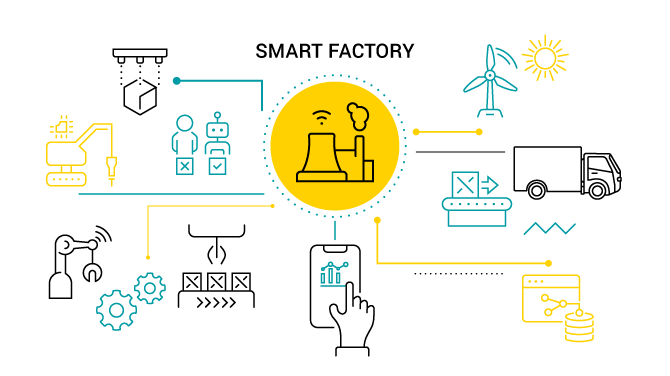
Embedded sensors on machines and throughout the production line to capture data on parameters like temperature, pressure, vibration, and product quality in real-time, with actuators responding to data inputs to adjust processes accordingly.
Industrial IoT (IIoT) Network:
A robust network infrastructure to connect all sensors, machines, and devices, enabling seamless data transmission and communication across the factory floor.
Edge Computing:
Data processing capabilities at the edge of the network, allowing for faster decision-making and immediate response to production fluctuations.
Utilizing algorithms to analyze large volumes of real-time data, identifying patterns, predicting potential issues, and optimizing production parameters.
Ready to find out more?
Drop us a line today for a free quote!